
resources
Exploring the Global Distribution: Where Do People Live and Why?
27 Jul 2025

Ever wondered where most people actually live on this planet? It’s a pretty interesting question, and the answer isn’t as simple as you might think. People aren’t spread out evenly at all. We’re going to look at why that is, what makes some places packed with folks and others pretty empty. It’s all about understanding the patterns of where people live and the reasons behind it.
Key Takeaways
- Population distribution is basically the pattern of where people settle on Earth.
- It’s not random; things like climate, landforms, and resources really shape where people can live comfortably.
- Human stuff matters too, like job opportunities, historical reasons, and even political decisions influence settlement.
- Globally, most people live in the Northern Hemisphere, and Asia has a really high population density.
- Distribution can change over time due to things like new technology or economic shifts.
Understanding Population Distribution
When we talk about where people live on Earth, we’re really looking at population distribution. It’s basically the pattern of how humans are spread out across the planet. Think of it like a giant map showing all the dots where people have decided to set up home. This pattern isn’t random; it’s the result of countless decisions and environmental factors over a very long time. It tells us a lot about how humans interact with their surroundings and how societies have developed.
Defining Where People Live
At its core, population distribution is simply the arrangement of people in a given area. It’s not just about how many people are there, but where they are. This can be looked at on a global scale, like how many people live in Europe versus Africa, or on a much smaller scale, like how neighborhoods are laid out within a city. It’s a way to visualize the human footprint on the landscape.
The Uneven Spread of Humanity
One of the most striking things about population distribution is how uneven it is. Some places are packed with people, while others are nearly empty. Generally, the areas that are easier to live in, with milder climates and fertile land, tend to have more people. Conversely, places that are harsh, like deserts or extremely cold regions, have very few inhabitants. This unevenness is a key characteristic of how humanity occupies the globe.
Visualizing Population Patterns
To get a better handle on this uneven spread, we often use maps. These maps can show us different ways people are arranged. There are three main types of patterns:
- Uniform distribution: People are spread out pretty evenly, like in some agricultural areas.
- Random distribution: People are scattered without any real pattern, which is less common.
- Clumped distribution: People live in groups or clusters, which is the most common pattern, often around cities or resource centers.
Understanding these patterns helps us grasp the bigger picture of human settlement and how it’s shaped by various forces. It’s fascinating to see how these arrangements change over time and across different regions, reflecting both environmental conditions and human choices. The way people settle is a direct result of their ability to adapt to and utilize their environment, and it’s a story that’s still unfolding. The environmental factors significantly influence population growth and settlement choices.
Physical Influences on Settlement
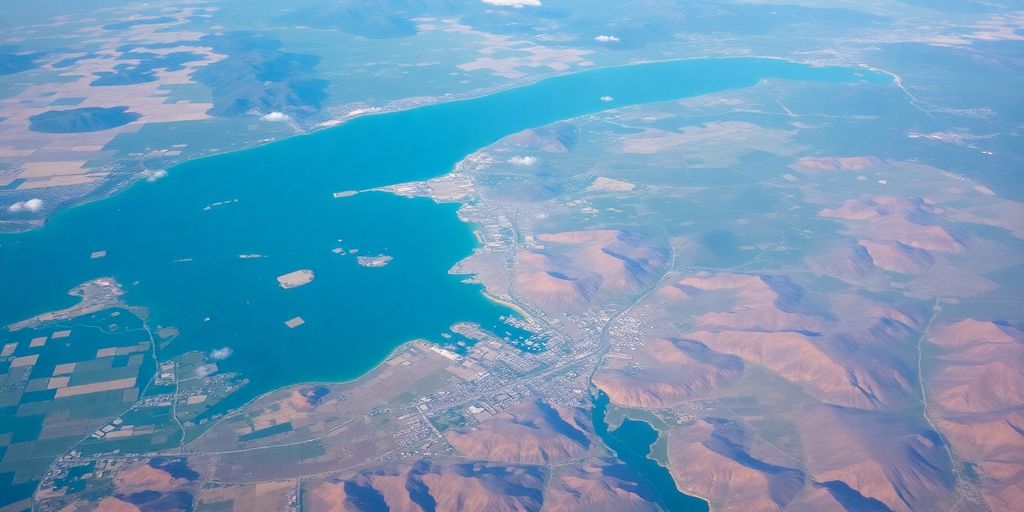
When we look at where people tend to settle, it’s pretty clear that the Earth’s physical features play a big part. It’s not just random; nature really shapes the map of human populations.
Climate and Habitable Environments
Climate is probably the biggest factor. Think about it: places that are too hot, too cold, too dry, or too wet just aren’t very comfortable for living or growing food. Most people prefer temperate climates with predictable weather. Extreme temperatures or rainfall patterns tend to push populations to the fringes. Even subtle differences in sunlight, temperature, and rain can make a huge difference in whether land is good for farming and, by extension, for supporting a lot of people. Areas prone to drought or flooding, for instance, usually have fewer inhabitants.
Landforms and Soil Fertility
Landforms matter a lot too. Flat, fertile plains and river valleys are prime real estate for human settlement. High mountains or very rugged terrain make it hard to build, farm, and travel, so fewer people live there. You can often see a sharp drop in population density right where mountains meet plains on a world map. River valleys are especially attractive because they often provide fertile soil, thanks to natural irrigation and silt deposits, which is great for agriculture. For example, a vast majority of Egypt’s population lives very close to the Nile River because its waters create fertile land perfect for supporting many people.
Vegetation and Resource Availability
Finally, vegetation and the availability of natural resources are key. Areas with good soil and access to water can support dense populations. Think about fertile river basins or plains that are good for farming. Conversely, areas with sparse vegetation, like deserts, or those that are difficult to access, tend to have much smaller populations. The presence of useful resources, whether it’s fertile land for agriculture or other natural materials, really draws people in and encourages economic activity.
The interplay between climate, landforms, and soil quality creates the basic framework for where human populations can thrive. These physical conditions set the stage for settlement, influencing everything from where we can grow food to how easily we can build communities.
Human Elements Shaping Where People Live
While the physical environment sets the stage for where humans can live, it’s the human elements that truly shape the patterns of population distribution we see across the globe. These factors are dynamic, constantly influencing migration, settlement choices, and the growth or decline of communities.
Economic Opportunities and Migration
Economic prospects are a massive driver for where people choose to settle. When jobs are plentiful and industries are booming in a particular area, people tend to move there, leading to population growth. Conversely, areas with limited economic opportunities often experience out-migration, as individuals seek better livelihoods elsewhere. This movement, known as migration, directly impacts population density and distribution.
- Job availability: Industries like manufacturing, technology, and services create concentrated employment centers.
- Resource extraction: The discovery and exploitation of natural resources (like oil, minerals, or fertile land) can lead to rapid population growth in specific locations.
- Infrastructure development: Good transportation networks, communication systems, and access to utilities make areas more attractive for settlement and economic activity.
The promise of a better economic future is a powerful magnet, drawing people from rural areas to cities or from less prosperous regions to those with more opportunities. This has been a consistent theme throughout history, from agricultural societies to today’s globalized economy.
Historical Settlement Patterns
Where people live today is also a legacy of past decisions and historical events. Long-established settlements, often founded for reasons that may no longer be primary (like defense or proximity to ancient trade routes), continue to influence current population distribution. Think about old cities that grew around castles or ports; even if their original purpose has faded, the infrastructure and established communities remain.
- Colonialism: Historical patterns of colonization often led to the establishment of administrative centers and resource extraction points that became major population hubs.
- Ancient trade routes: Cities that grew along historic Silk Roads or maritime trade routes often retain significant populations due to their established infrastructure and historical importance.
- Past conflicts or famines: Events like wars or widespread crop failures in the past could lead to depopulation in certain areas, with effects that linger for generations.
Cultural and Political Factors
Beyond economics and history, cultural preferences and political decisions play a significant role. Some people prefer to live in areas with specific cultural amenities or community ties, while political stability or government policies can encourage or discourage settlement in certain regions. For instance, government investment in infrastructure in underdeveloped areas can spur population growth, while political instability can lead to displacement.
- Religious or ethnic enclaves: People may choose to live in areas where they can practice their faith or be part of a community with shared cultural backgrounds.
- Government policies: Policies related to housing, urban planning, or regional development can influence where people settle.
- Perceived quality of life: Factors like access to education, healthcare, safety, and recreational opportunities contribute to a region’s attractiveness for settlement, often tied to cultural values. Settlement patterns are a direct result of these combined human influences.
Global Distribution Patterns
When we look at a map of the world, it’s pretty clear that people aren’t spread out evenly. Some places are packed with folks, while others are practically empty. This unevenness is what we call population distribution, and it’s shaped by a whole bunch of things, both natural and human-made.
Concentrations in the Northern Hemisphere
One of the most striking things about global population distribution is how much of it is concentrated in the Northern Hemisphere. Think about it: North America, Europe, and most of Asia are all up there. There are a few reasons for this. For starters, a lot of the Earth’s landmass is in the Northern Hemisphere. Plus, historically, many of these areas have had climates that are easier for people to live in, with more temperate weather and fertile land for farming. It’s not a hard and fast rule, of course, but it’s a major trend you can see right away.
Asia’s High Population Density
Asia is a real standout when it comes to population. It’s home to the two most populous countries in the world, China and India, and many other densely populated nations. This high density is a result of a long history of settlement, fertile river valleys that have supported agriculture for thousands of years, and the development of major urban centers. The sheer number of people living in Asia significantly influences global population patterns.
Comparing Population Distribution Across Continents
Looking at how populations are spread out across different continents really highlights the variations. For instance, Africa has a growing population, with many people concentrated in certain regions like the Nile River Valley and coastal areas, while vast deserts and rainforests remain sparsely populated. South America also shows uneven distribution, with large populations along the coasts and in fertile inland areas, contrasted by the Amazon rainforest. Even within continents, you see huge differences. Understanding these continental comparisons helps us grasp the bigger picture of where humanity calls home.
The way people are spread across the globe isn’t random. It’s a complex story told by geography, climate, history, and the choices people make about where to live and work.
Here’s a quick look at how some continents stack up in terms of population density (people per square kilometer):
| Continent | Approx. Population Density |
|---|---|
| Asia | ~100 |
| Europe | ~73 |
| Africa | ~45 |
| North America | ~20 |
| South America | ~22 |
| Oceania | ~5 |
These numbers are just averages, of course. Within each continent, there are areas with much higher and much lower densities. For example, the eastern coast of China has a far greater population density than the western interior. This kind of variation is what makes studying population distribution so interesting. It’s all about understanding the patterns and the reasons behind them, which is key for things like urbanization and migration.
Factors Affecting Local Distribution
Internal Variations Within Countries
Even within a single country, population distribution can vary wildly. Think about the United States, for instance. You have massive urban centers like New York City and Los Angeles, packed with millions of people, right alongside vast, sparsely populated rural areas, especially in the West and Midwest. This internal spread is often driven by economic opportunities. Cities tend to concentrate jobs, services, and amenities, drawing people in. Conversely, areas with fewer economic prospects might see populations decline or remain low. It’s a constant push and pull, with people moving towards perceived advantages.
The Impact of Local Geography
Local geography plays a huge role in where people decide to settle. Imagine trying to build a city on a steep mountainside versus a flat river valley. The river valley, with its fertile soil and easier access to water and transportation, is naturally more appealing for settlement. Mountainous regions, on the other hand, present challenges like difficult travel, limited arable land, and sometimes harsher climates, which tend to keep population numbers lower. Even smaller features, like the presence of a good harbor or a natural pass through hills, can become focal points for population clusters.
Resource Accessibility and Population Density
Access to resources is a big one when we talk about population density. Historically, people settled where they could easily get what they needed to survive and thrive. This meant areas with fertile soil for farming, reliable water sources, and access to fuel or building materials. Today, while global trade means we aren’t as tied to immediate local resources for survival, the principle still holds. Areas rich in natural resources like minerals, oil, or even just good agricultural land often support higher population densities because these resources create economic activity and jobs. Think about mining towns or agricultural regions – they tend to be denser where the resources are.
The distribution of people isn’t just about where it’s easy to live; it’s also about where it’s profitable and practical to live, based on what the land offers and what people can do with it.
Here’s a quick look at how resource availability can influence population density:
- Fertile River Valleys: Areas like the Nile Delta or the Ganges Plain have supported dense populations for centuries due to rich soil ideal for agriculture. population density is often highest here.
- Mineral-Rich Regions: Towns and cities often spring up around significant mineral deposits, like coal or diamonds, leading to localized population booms.
- Water Access: Proximity to fresh water, whether from rivers, lakes, or even underground aquifers, remains a key factor, especially in drier climates.
Understanding these localized factors helps explain why some areas are bustling hubs of activity while others remain quiet and sparsely populated. It’s a complex interplay of geography, economics, and human needs that shapes where we call home.
The Dynamic Nature of Population Distribution
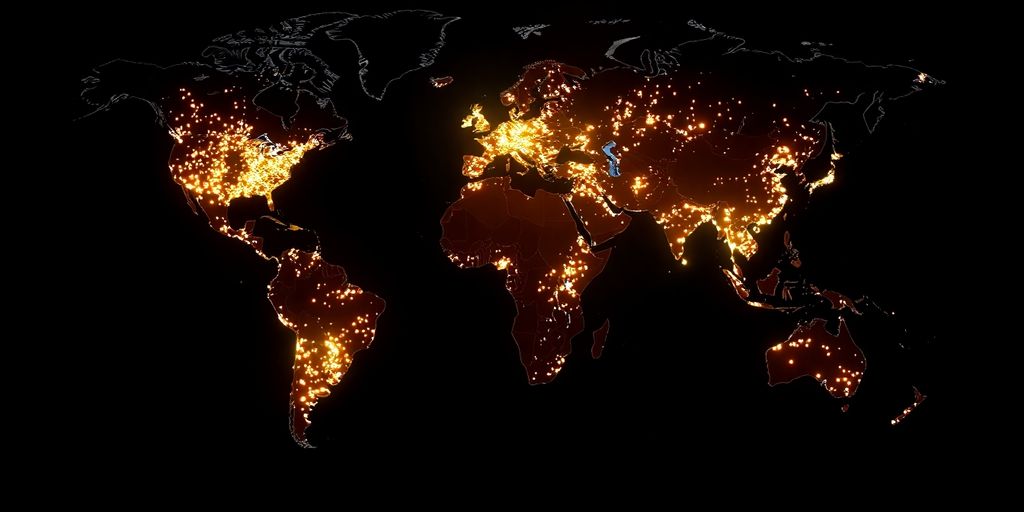
The way people spread out across the globe isn’t set in stone; it’s always changing. Think about it – where we live today is a result of centuries of shifts, driven by big events and new ideas. It’s a story of constant movement and adaptation.
Technological Advancements and Settlement
New technologies have a massive impact on where people can live and how they live there. For instance, advancements in agriculture, like better irrigation and crop varieties, allowed people to settle in areas that were previously too dry or difficult to farm. More recently, things like air conditioning have made living in hotter climates much more comfortable, potentially shifting populations towards those regions. The internet and remote work technologies are also starting to change things, allowing people to live further away from traditional job centers.
The Industrial Revolution’s Impact
The Industrial Revolution was a game-changer for population distribution. Before this period, most people lived in rural areas, farming the land. But when factories started popping up, especially those powered by new energy sources like coal and steam, people moved in droves to be near the jobs. This led to the rapid growth of cities and created dense population centers around industrial hubs. This migration from rural to urban areas fundamentally reshaped where large groups of people lived.
Ongoing Changes in Where People Live
Population distribution continues to evolve. We see this in the growth of suburbs, the revitalization of some city centers, and the migration patterns driven by economic opportunities or even climate change. Understanding these shifts helps us grasp how societies develop and adapt to new challenges and possibilities. The study of Demography helps us track and understand these population movements.
The movement of people isn’t just about finding a job; it’s also about seeking better living conditions, safety, and opportunities for future generations. These decisions, made by millions, collectively sculpt the human landscape we see today.
Putting It All Together
So, as we’ve seen, figuring out where people live across the globe is pretty complex. It’s not just about one thing; it’s a mix of natural stuff like climate and landforms, plus human elements like jobs and even history. Think about it – places with good soil and weather tend to attract more people, but then things like conflict or economic opportunities can really shift those patterns. It’s a constant dance between what the Earth offers and what people need or create. Understanding these distribution patterns helps us make sense of the world around us, from local neighborhoods to vast continents. It’s a big puzzle, and we’ve only just started looking at the pieces.
Frequently Asked Questions
What is population distribution?
Population distribution simply means how people are spread out across the Earth. It’s like looking at a map and seeing where the most people live and where there are very few people.
What natural factors influence where people live?
Many things affect where people choose to live. Good weather, flat land that’s easy to build on, and fertile soil for growing food are big draws. Access to water is also super important. On the flip side, places that are too hot, too cold, too dry, or have rough terrain usually have fewer people.
How do jobs and history affect population spread?
Jobs and economic chances play a huge role! When there are good job opportunities, like in cities with factories or businesses, more people tend to move there, making those areas more crowded. Historical events and government decisions can also influence where people settled long ago and how populations are spread out today.
Why do most people live in the Northern Hemisphere, especially Asia?
Most people live in the Northern Hemisphere because it has more land and a wider variety of climates that are good for living and farming. Asia, in particular, has a huge number of people, especially in countries like China and India, due to its large land area and historically fertile river valleys.
Are populations spread out evenly within countries?
Even within a country, you’ll see differences. Areas with better resources, easier travel, and more job openings tend to be more populated than places that are harder to get to or have fewer opportunities. Think about how cities are usually packed with people compared to remote rural areas.
Does population distribution change over time?
Yes, population distribution is always changing! Things like new technology that makes difficult places easier to live in, or major events like the Industrial Revolution that created lots of jobs in certain areas, can shift where people live. We’re constantly seeing new patterns emerge as the world changes.


